Letter from the Team: Memorializing Black Midwives
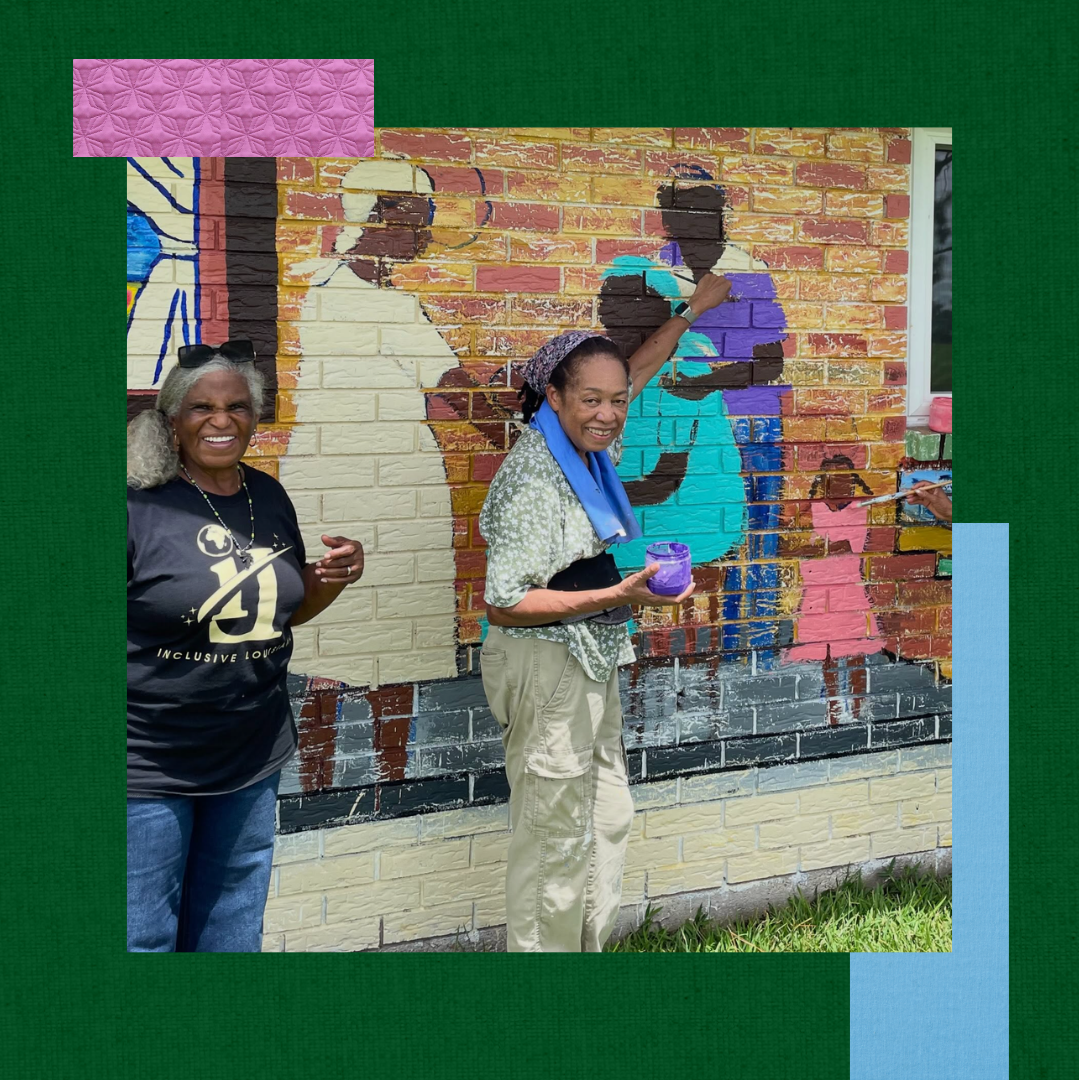
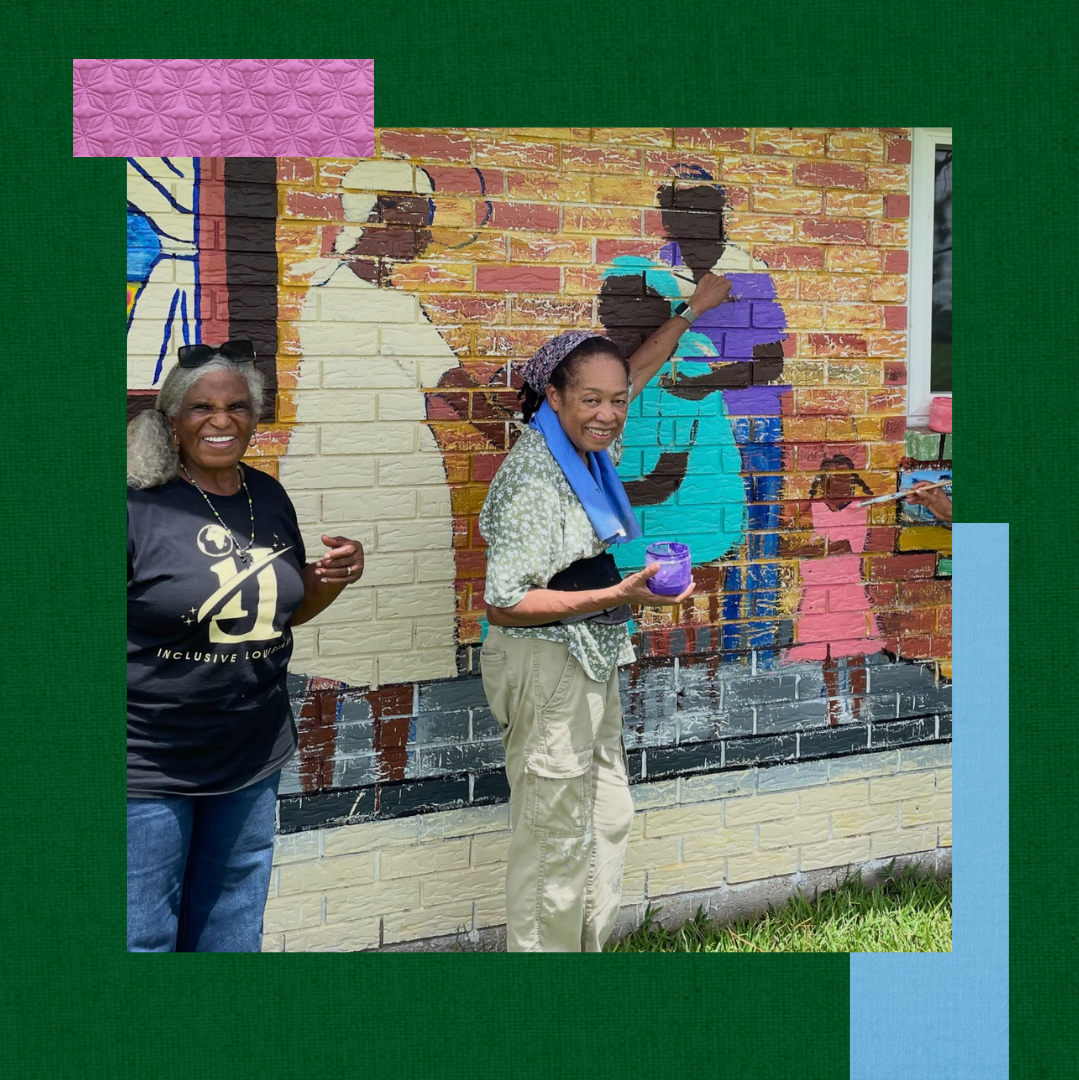
Artist and poet Malaika Favorite painting her midwives mural. River Parishes, Louisiana.
“I was born on River Road in Geismar, delivered by a local midwife, just like my older brother before me. This project is personal to me in the deepest way — it’s a chance to give back to the women who gave so much to families like mine. Every brushstroke on this wall is an act of gratitude.” — Malaika Favorite
As the weather begins to cool and fall ushers in, I recall a very hot day at the end of July when I just happened to call Artist/Poet Malaika Favorite. It was 90 degrees in Harrisonburg, Virginia and closer to 95 degrees in Convent, Louisiana. She told me that she was putting the finishing touches on a mural on the exterior of Inclusive Louisiana’s Village Hub building honoring the legacy of Black midwives who served the River Parishes for generations.
These unsung Black midwives provided maternal care in remote towns and villages in the South from the earliest arrival of their enslaved ancestors well into the 20th century. In the River Parishes, these midwives served women who had been denied access to care from segregated hospitals and white physicians. They used years of training in medicine, indigenous plants and healing practices to deliver their babies, advise them on female issues, and cure their illnesses even when there was real push back from medical authorities.
Though Malaika was rushing to complete the mural for the August 1 dedication and community celebration organized by Common Ground USA and Inclusive Louisiana, she stopped a few minutes to share why this project was so important to her.
“I was born on River Road in Geismar, delivered by a local midwife, just like my older brother before me. This project is personal to me in the deepest way — it’s a chance to give back to the women who gave so much to families like mine. Every brushstroke on this wall is an act of gratitude.”
Over my 35-year friendship with Malaika Favorite, I have come to expect this kind of artistic activism as Malaika was the creator of the Furious Flower Portrait Quilt and other paintings that brought to life several lines from poems by Margaret Walker, Langston Hughes, Ishmael Reed, and Derek Walcott. It is no surprise that she has collaborated with the Village Hub, which serves as a gathering place for environmental justice, youth education, and cultural preservation, to remind us of the culture of care that is so much a part of our story.
Joanne V. Gabbin
Executive Director
Wintergreen Women Writers Collective
Call the Midwife by Opal Moore
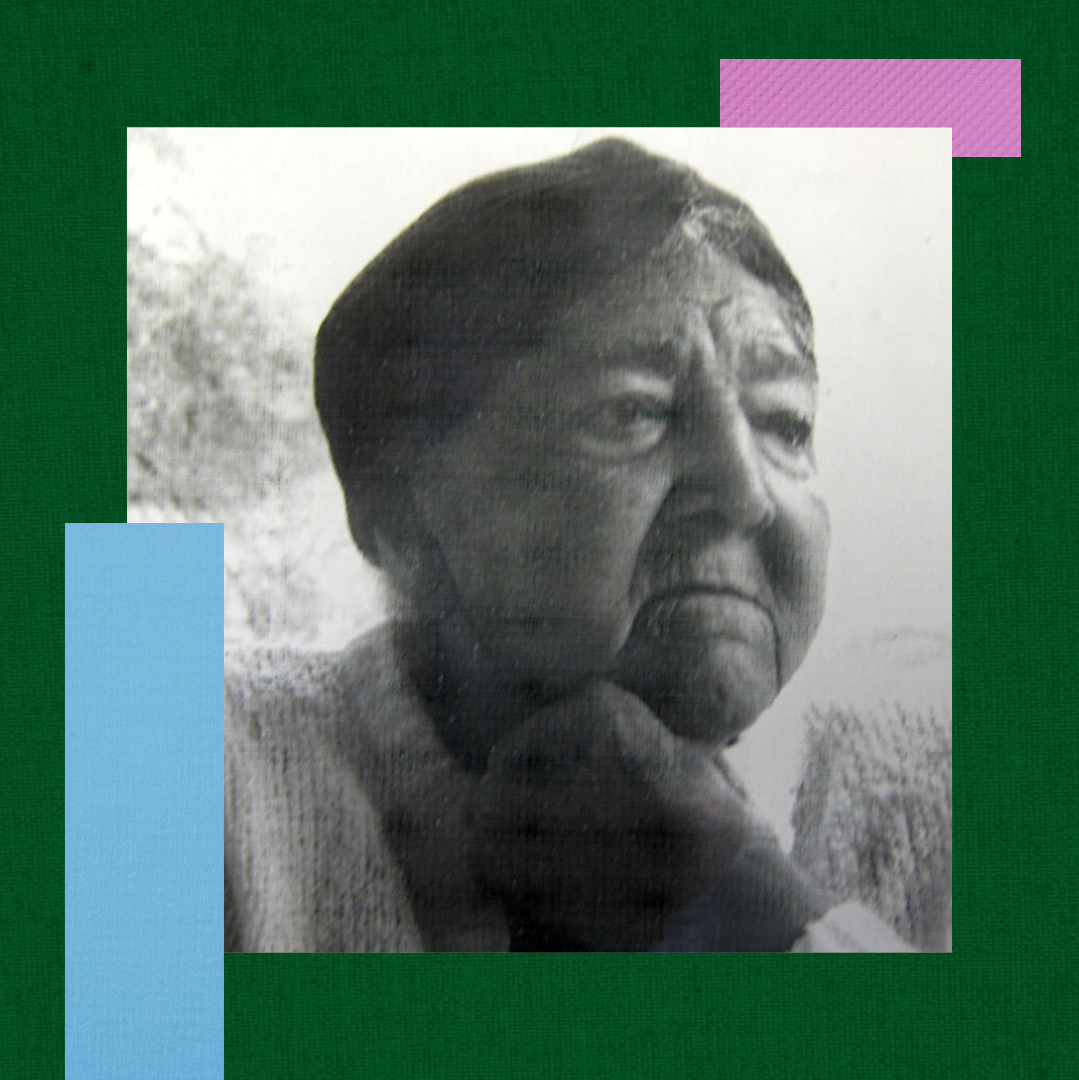
Portrait of Margaret Charles Smith.
I was born on River Road, delivered by a midwife right across from the levee. I grew up surrounded by muddy water, blue skies, the red in a pot of boiled crawfish. Louisiana color—saturated, generous, alive. It went into me early and it never left.
— Malaika Favorite, fr. Born On River Road, Reflections on One Year of After Color
Margaret Charles Smith was a legendary traditional "granny midwife" in rural Alabama who delivered more than 3,000 babies over a 35-year career without losing a single mother.
— ai overview
In "Memorializing Black Midwives", the Director's note, Joanne Gabbin celebrates the work of our sister artist, Malaika Favorite, and her recently completed mural art at Village Hub, a community center in Convent, Louisiana. It might seem like mere nostalgia to celebrate midwifery, a profession that predates modern medicine and could, for many, represent the bad old days before Black women or poor women could access standard hospital care in delivery and for pre and post-natal care.
I googled "the last Black midwife" and ai gave me Margaret Charles Smith. Born in Eutaw, Alabama in 1906, Smith was traditionally trained by midwives serving women in segregated and medically underserved communities where women were often malnourished and their pregnancies high-risk. Smith handled all manner of birth complications, including breach and twin births. She served families in settings that typically lacked electricity or running water. Even under these circumstances, Smith is documented as having delivered more than 3000 babies and, in her remarkable career, she "never lost a mother."
In this moment, I think, rather ironically, of Prissy in Gone With the Wind who famously exclaims, "Lawzy, we got to have a doctor! I don't know nuthin' about birthin' babies!" Perhaps the thing to know about the tradition of midwifing is its prioritizing of the woman herself, and its commitment to giving close attention to the specific needs of the mother being served, as well as knowledge of her context--her life in a community.
The recent uptick in attention to the lost art and labor of the midwife likely responds to the current predicament of the modern American woman who is not being seen so much as surveilled, criminalized and subordinated to her fetus. In 1976 Alabama outlawed the traditional practice of midwifery. In June of 2022 the U.S. Supreme Court repealed Roe v Wade unleashing a wave of invasive, body-specific laws.
A pregnant body may be regarded as a public object of scrutiny. A woman who miscarries or delivers a stillborn infant may need a lawyer to prove she is innocent of murder. A spokesperson for the Southern Birth Justice Network asserts, in an interview, "Our bodies still belong to us!" A claim that the midwife would never have doubted.
Opal Moore
Programs & Partnerships Coordinator
Wintergreen Women Writers Collective
Related News